
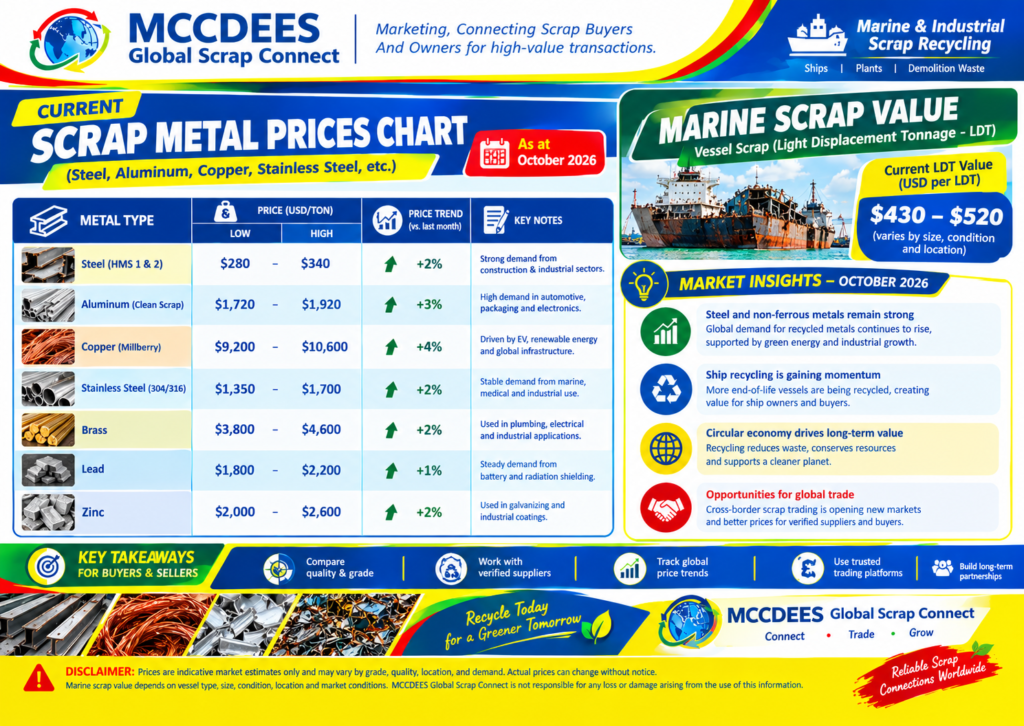
Retired ships may have reached the end of their sailing careers, but they still hold remarkable value. Every vessel contains large amounts of recyclable metals that support industries around the world. Ship recycling transforms these old marine assets into valuable raw materials for manufacturing and construction. While many sellers check a current scrap metal prices chart before marketing a vessel, understanding the metals inside helps explain their true value.
Cargo ships, tankers, barges, offshore vessels, and passenger ships all contain reusable metals hidden beneath their decks. Careful dismantling allows these materials to return to productive use. Every recovered metal supports a cleaner environment while reducing the need for new mining.
Structural Steel Makes Up Most of the Vessel
Steel remains the largest recyclable material inside retired ships.
The hull, decks, frames, bulkheads, cargo holds, and structural supports are mainly built from steel.
Large vessels often contain thousands of tons of recoverable steel.
Construction companies use recycled steel for buildings, bridges, warehouses, and infrastructure projects.
Manufacturers also depend on recycled steel for machinery and industrial equipment.
Strong demand keeps structural steel valuable throughout the year.
Many sellers review a current scrap metal prices chart before negotiating with buyers.
However, total steel quantity also plays an important role.
Good recovery methods protect material quality during dismantling.
Copper Brings Excellent Recycling Value
Copper appears throughout every modern vessel.
Electrical wiring carries power across the ship.
Generators, motors, transformers, switchboards, and communication equipment also contain copper.
Cooling systems frequently include copper tubing.
Although copper weighs much less than steel, it often contributes significant value.
Clean copper attracts strong buyer interest.
Careful removal protects the material from unnecessary damage.
Separate storage preserves its quality.
Professional sorting improves buyer confidence and recycling efficiency.
Stainless Steel Performs in Tough Conditions
Marine environments expose vessels to saltwater every day.
Stainless steel resists corrosion better than many other metals.
Engine rooms contain stainless steel pipes, valves, filters, and exhaust systems.
Ship kitchens include stainless steel sinks, worktables, cabinets, and food preparation equipment.
Accommodation areas also contain handrails and sanitary fixtures.
These materials remain highly recyclable after retirement.
Industrial demand for stainless steel continues growing.
Clean separation improves recovery value.
Every recovered component supports efficient manufacturing.
Aluminum, Brass, and Bronze Add Hidden Value
Retired ships contain many valuable non-ferrous metals.
Aluminum appears in ladders, doors, windows, railings, deck structures, and superstructures.
Its lightweight design makes it useful throughout marine construction.
Brass commonly appears in plumbing systems, valves, electrical fittings, and marine hardware.
Bronze is often used in propellers, bearings, bushings, and specialized marine components.
These metals increase the overall value of every recycling project.
Careful separation improves buyer evaluations.
Professional recovery maximizes returns.
Valuable Equipment Should Not Be Overlooked
Ships contain much more than recyclable metals.
Engine rooms include generators, pumps, compressors, turbines, and electrical equipment.
Some machinery remains suitable for refurbishment before recycling begins.
Anchors, cranes, winches, and navigation systems may also retain value.
Professional inspections identify reusable equipment before dismantling.
Detailed inventories help buyers estimate project value.
Every reusable component strengthens the final offer.
Careful handling protects valuable machinery throughout recovery.
Proper Sorting Improves Buyer Confidence
Recovering metals is only the beginning.
Sorting materials correctly creates additional value.
Keep steel separate from copper, aluminum, stainless steel, brass, and bronze.
Different stainless steel grades should remain separated whenever practical.
Clean materials require less processing after delivery.
Professional organization speeds up buyer inspections.
Many businesses compare a current scrap metal prices chart while evaluating different metal categories.
Preparation often strengthens negotiations.
Organized shipments demonstrate professionalism.
Documentation Supports Better Transactions
Professional paperwork builds trust.
Prepare detailed inventories showing estimated material quantities.
Take recent photographs throughout the vessel.
Include engine rooms, cargo areas, deck equipment, and accommodation spaces.
Inspection reports improve buyer understanding.
Commercial documents should accurately describe available materials.
Reliable records reduce misunderstandings during negotiations.
Organized paperwork supports transportation planning.
Preparation reflects responsible business management.
Marine Recycling Supports a Sustainable Future
Ship recycling protects valuable natural resources.
Recovered metals reduce the need for additional mining.
Manufacturing recycled metals generally requires less energy than producing new materials.
Lower energy use also reduces environmental impact.
Responsible recycling keeps valuable resources in productive use.
Many sellers review a current scrap metal prices chart, but environmental value also strengthens the industry.
Growing demand for recycled metals supports long-term market opportunities.
Every retired vessel contributes to a cleaner future.
Retired ships contain an impressive collection of valuable recyclable metals. Steel, copper, stainless steel, aluminum, brass, bronze, and reusable equipment all contribute to a vessel’s recycling value. While many businesses study a current scrap metal prices chart before making selling decisions, successful marine recycling also depends on careful inspections, professional sorting, organized documentation, and responsible recovery methods. By understanding the valuable metals hidden inside retired ships, you can maximize returns while supporting sustainable manufacturing and the growing global recycling industry.
How Vessel Age Influences Scrap Prices
Every ship eventually reaches the end of its working life. Some vessels retire after decades of reliable service, while others leave operation much sooner. When that time comes, buyers carefully evaluate many factors before making an offer. One of the biggest factors is the vessel’s age. Although many sellers study a current scrap metal prices chart, the age of the ship also plays an important role in determining its recycling value.
Older vessels often contain large amounts of recyclable steel and non-ferrous metals. However, they may also require additional inspection, preparation, and dismantling work. Understanding how age affects pricing helps you prepare better and negotiate with greater confidence.
Older Ships Often Contain More Recoverable Steel
Many older vessels were built with thicker steel plates.
Shipbuilders focused heavily on strength and durability.
As a result, some retired vessels contain impressive amounts of structural steel.
The hull, decks, bulkheads, cargo holds, and internal frames all contribute to total recoverable weight.
Large steel quantities attract recycling companies around the world.
However, buyers also inspect the steel’s overall condition.
Surface corrosion does not always reduce recycling value significantly.
Many sellers compare offers alongside a current scrap metal prices chart before making decisions.
Steel weight remains one of the largest pricing factors.
Wear and Corrosion Affect Recovery Costs
Years of operation expose vessels to difficult conditions.
Saltwater, changing temperatures, and heavy cargo create constant wear.
Some corrosion is expected on older ships.
However, severe structural damage may increase dismantling costs.
Buyers calculate the extra work needed before recycling begins.
Rust does not automatically eliminate value.
Professional inspections help determine the true condition.
Accurate reports reduce uncertainty during negotiations.
Well-maintained vessels often receive stronger buyer interest.
Good maintenance records also increase confidence.
Machinery Condition Adds Extra Value
The vessel’s age does not tell the whole story.
Some older ships receive excellent maintenance throughout their service lives.
Engines, generators, pumps, compressors, and navigation systems may remain valuable.
Certain equipment can be refurbished before recycling.
Buyers inspect machinery carefully before preparing offers.
Well-maintained equipment creates additional opportunities beyond metal recovery.
Detailed maintenance records strengthen buyer confidence.
Professional inspections identify reusable components.
Every working system adds potential value.
Metal Prices Still Matter
Age influences pricing, but market conditions also play a major role.
Steel, copper, aluminum, stainless steel, brass, and bronze change in value throughout the year.
Construction activity affects steel demand.
Manufacturing influences copper and aluminum consumption.
Renewable energy projects increase demand for recyclable metals.
Many suppliers regularly check a current scrap metal prices chart before negotiating with buyers.
Understanding both vessel condition and market trends supports better business decisions.
Knowledge strengthens your negotiating position.
Documentation Improves Buyer Confidence
Professional paperwork becomes even more important for older vessels.
Prepare ownership records before marketing the ship.
Include maintenance history whenever available.
Inspection reports help buyers understand the vessel’s condition.
Equipment inventories also improve pricing accuracy.
Recent photographs provide valuable visual information.
Organized documentation demonstrates professionalism.
Reliable records reduce misunderstandings during negotiations.
Preparation often speeds up buyer evaluations.
Well-prepared sellers create stronger first impressions.
Location Also Influences Final Value
A vessel’s location affects transportation costs.
Ships located near recycling facilities often attract greater buyer interest.
Long towing distances increase project expenses.
Port access also influences operational planning.
Buyers include transportation costs when preparing offers.
Convenient locations simplify logistics.
Good access supports faster project completion.
Location and age work together during pricing decisions.
Every factor contributes to the final offer.
Proper Preparation Makes a Difference
Preparing an older vessel helps maximize its value.
Remove unnecessary waste before inspections.
Organize available documents carefully.
Create accurate equipment inventories.
Provide recent photographs from different vessel areas.
Maintain open communication with potential buyers.
Professional preparation creates confidence.
Many sellers compare buyer offers with a current scrap metal prices chart, but preparation often influences negotiations just as much.
Small improvements can create better results.
Long-Term Relationships Create Better Opportunities
One successful vessel sale often leads to future business.
Reliable buyers appreciate honest sellers.
Clear communication strengthens every transaction.
Professional behavior encourages repeat business.
Satisfied buyers frequently recommend dependable suppliers.
Trust grows through consistent performance.
Strong partnerships reduce uncertainty during future projects.
Long-term relationships often provide greater value than one-time sales.
Reputation remains one of your greatest business assets.
The age of a vessel plays an important role in determining its recycling value, but it is only one part of the overall picture. Steel quantity, machinery condition, maintenance history, corrosion, location, documentation, and market demand all influence buyer decisions. While many sellers review a current scrap metal prices chart before negotiating, successful transactions also depend on careful preparation, honest communication, and professional presentation. By understanding how vessel age affects scrap pricing, you can make informed decisions and maximize the value of your retired marine assets.
Finding Verified Buyers for Marine Assets
Selling a retired marine asset can be exciting when you connect with the right buyer. Whether you own a cargo ship, barge, tugboat, ferry, offshore platform, or fishing vessel, finding verified buyers makes the process smoother and safer. Many sellers watch a current scrap metal prices chart before listing their assets, but choosing trustworthy buyers is equally important for a successful transaction.
Verified buyers usually value honesty, clear communication, and accurate information. They also appreciate sellers who prepare professional documentation and present their vessels properly. Building trust from the beginning creates better negotiations and stronger long-term business relationships.
Start with Accurate Vessel Information
Good information attracts serious buyers.
Describe your marine asset honestly.
Include the vessel’s type, age, dimensions, location, and overall condition.
Provide recent photographs from different areas.
Show the engine room, deck, accommodation, cargo spaces, and exterior.
Prepare a simple inventory of major equipment.
Accurate information reduces unnecessary questions.
Professional presentations help buyers make faster decisions.
Honest descriptions build confidence from the beginning.
Trust starts with clear communication.
Prepare Documents Before Marketing
Professional paperwork makes every transaction easier.
Gather ownership records before contacting buyers.
Prepare maintenance records whenever available.
Include inspection reports if they exist.
Create an inventory showing major equipment and recyclable materials.
Digital copies simplify communication with international buyers.
Organized documents reduce unnecessary delays.
Professional preparation reflects responsible ownership.
Reliable paperwork strengthens buyer confidence.
Preparation saves valuable negotiation time.
Research Buyers Carefully
Not every buyer offers the same level of professionalism.
Take time to research potential buyers.
Review their business history whenever possible.
Look for companies with proven experience in marine recycling.
Ask reasonable questions before accepting offers.
Reliable buyers communicate clearly throughout the process.
Professional companies respect agreed timelines.
Good research reduces unnecessary risks.
Choosing the right buyer often matters more than choosing the fastest buyer.
Compare More Than Price
Price is important, but it should never be your only consideration.
Many sellers compare offers using a current scrap metal prices chart before negotiating.
However, payment reliability also matters.
Professional communication creates confidence.
Experience handling marine assets adds value.
Efficient logistics simplify project planning.
Reliable documentation supports smooth transactions.
Honest buyers explain their purchasing process clearly.
Long-term value often comes from dependable partnerships.
Smart decisions balance price with reliability.
Build Trust Through Honest Communication
Communication keeps every project moving forward.
Reply to buyer questions promptly.
Provide accurate answers at every stage.
Inform buyers immediately if something changes.
Avoid exaggerating the vessel’s condition.
Professional conversations reduce misunderstandings.
Reliable communication strengthens business relationships.
Honest sellers attract serious buyers.
Trust grows through consistency and transparency.
Every conversation shapes your reputation.
Prepare for Buyer Inspections
Most verified buyers request inspections.
Prepare your vessel before inspection day.
Remove unnecessary waste from accessible areas.
Ensure equipment remains visible whenever practical.
Provide safe access throughout the vessel.
Have documents available during inspections.
Professional preparation creates positive first impressions.
Transparency helps buyers evaluate opportunities accurately.
Well-prepared vessels encourage smoother negotiations.
Preparation demonstrates professionalism.
Use Digital Tools to Expand Your Reach
Technology helps sellers reach buyers worldwide.
Professional online listings attract international interest.
Recent photographs improve listing quality.
Digital document sharing speeds communication.
Video meetings allow remote vessel inspections.
Online messaging simplifies negotiations.
Electronic signatures help complete agreements efficiently.
Many buyers monitor a current scrap metal prices chart while reviewing available marine assets.
Technology removes many traditional barriers.
Digital tools create global opportunities.
Long-Term Relationships Create More Opportunities
One successful sale often leads to another.
Stay in contact with verified buyers after completing transactions.
Notify them when additional marine assets become available.
Ask for feedback after every project.
Reliable buyers appreciate dependable sellers.
Professional service encourages repeat business.
Satisfied buyers often recommend trusted suppliers.
Strong relationships reduce uncertainty during future negotiations.
Trust becomes one of your greatest business advantages.
Finding verified buyers for marine assets requires preparation, honesty, and patience. Accurate vessel information, organized documentation, professional communication, and careful buyer research all improve your chances of securing successful transactions. While many sellers study a current scrap metal prices chart before entering negotiations, long-term success also depends on building trusted relationships with reliable buyers. By focusing on professionalism as much as pricing, you position yourself for repeat business, smoother transactions, and lasting success in the growing global marine recycling industry.
Sustainability in Ship Recycling Practices
Ship recycling has become an important part of the global recycling industry. Every retired vessel contains valuable materials that deserve a second life. Instead of allowing ships to rust away, responsible recycling helps recover useful metals for future manufacturing. While many businesses monitor a current scrap metal prices chart before buying or selling marine assets, sustainability has become just as important as pricing.
Modern ship recycling protects valuable resources while supporting industries around the world. Steel, copper, aluminum, stainless steel, brass, and bronze all return to productive use through careful recovery. Every recycled vessel reduces waste and helps create a cleaner future.
Recycling Conserves Natural Resources
Every recycled ship helps reduce the demand for newly mined metals.
Mining requires significant amounts of energy and natural resources.
Recovering metals from retired vessels reduces this pressure.
Structural steel can become new buildings, bridges, and industrial equipment.
Recycled copper supports electrical systems and manufacturing.
Aluminum returns to transportation, construction, and packaging industries.
Stainless steel serves food processing and medical equipment production.
Responsible recycling keeps valuable resources in circulation.
Many sellers compare offers using a current scrap metal prices chart, but environmental benefits also deserve attention.
Every recovered metal supports sustainable development.
Lower Energy Use Benefits Everyone
Producing recycled metals usually requires less energy than producing new metals.
Lower energy use helps manufacturers reduce operating costs.
Reduced energy demand also lowers greenhouse gas emissions.
Businesses increasingly choose recycled materials to meet sustainability goals.
Customers appreciate environmentally responsible companies.
Governments encourage recycling through environmental policies.
Energy savings benefit industries and communities alike.
Responsible recycling supports cleaner manufacturing.
Small improvements create meaningful long-term results.
Every recycled shipment contributes to a healthier planet.
Safe Ship Recycling Protects People
Sustainability also means protecting workers.
Responsible recycling begins with proper planning.
Hazardous materials should be removed carefully before dismantling starts.
Fuel residues, oils, batteries, insulation, and chemicals require safe handling.
Protective equipment helps reduce workplace risks.
Well-organized recycling yards improve safety.
Professional training supports responsible operations.
Safe working environments improve productivity.
Protecting people remains just as important as recovering metals.
Responsible businesses make safety a daily priority.
Careful Recovery Reduces Waste
Every retired vessel contains more than recyclable steel.
Copper wiring, aluminum structures, stainless steel equipment, brass fittings, and bronze components all deserve careful recovery.
Some machinery remains suitable for refurbishment.
Generators, pumps, cranes, anchors, and navigation equipment may continue serving useful purposes.
Professional inspections identify reusable components before dismantling.
Careful recovery increases project value.
Organized sorting reduces unnecessary waste.
Every reusable item supports a circular economy.
Responsible recycling maximizes every opportunity.
Technology Improves Sustainable Recycling
Modern technology continues improving ship recycling.
Portable metal analyzers identify valuable alloys quickly.
Advanced cutting equipment improves dismantling efficiency.
Digital inventory systems track recovered materials accurately.
Electronic documentation simplifies project management.
Automation reduces unnecessary waste.
Technology also improves workplace safety.
Online communication connects responsible buyers with professional recyclers.
Innovation helps recover more valuable materials.
Modern equipment supports sustainable operations.
Responsible Buyers Encourage Better Practices
Professional buyers value responsible recycling methods.
They appreciate accurate documentation and honest communication.
Verified buyers also encourage environmentally responsible dismantling.
Reliable partnerships strengthen sustainable business practices.
Many companies now evaluate environmental performance before purchasing marine assets.
Responsible suppliers attract stronger buyer confidence.
Professional relationships create long-term business opportunities.
Sustainability improves both reputation and profitability.
Trust supports every successful recycling project.
Local Actions Create Global Benefits
Every recycling project contributes to worldwide sustainability.
Recovered metals support manufacturers across many countries.
Recycled materials reduce pressure on natural resources everywhere.
Communities benefit from cleaner recycling operations.
Manufacturing industries receive dependable raw materials.
Environmental improvements continue growing through responsible recycling.
Many businesses review a current scrap metal prices chart before making decisions, but long-term environmental value also matters.
Every vessel recycled responsibly supports future generations.
Small local efforts create meaningful global results.
Sustainability Strengthens the Future
Environmental awareness continues increasing around the world.
Manufacturers now use more recycled materials than ever before.
Governments continue encouraging cleaner industrial practices.
Technology keeps improving recycling efficiency.
Professional standards become stronger each year.
Responsible ship recycling creates opportunities for businesses and communities.
Growing demand for recycled metals supports future investment.
Sustainability remains central to long-term industry growth.
The future of marine recycling looks increasingly positive.
Sustainability in ship recycling practices creates lasting benefits for industries, communities, and the environment. Responsible recovery of steel, copper, aluminum, stainless steel, brass, bronze, and reusable equipment reduces waste while conserving valuable natural resources. Although many businesses monitor a current scrap metal prices chart before making trading decisions, successful ship recycling depends equally on safe operations, careful planning, modern technology, and environmental responsibility. By supporting sustainable recycling practices, you help create a cleaner world while contributing to the growing global demand for recycled marine materials.