
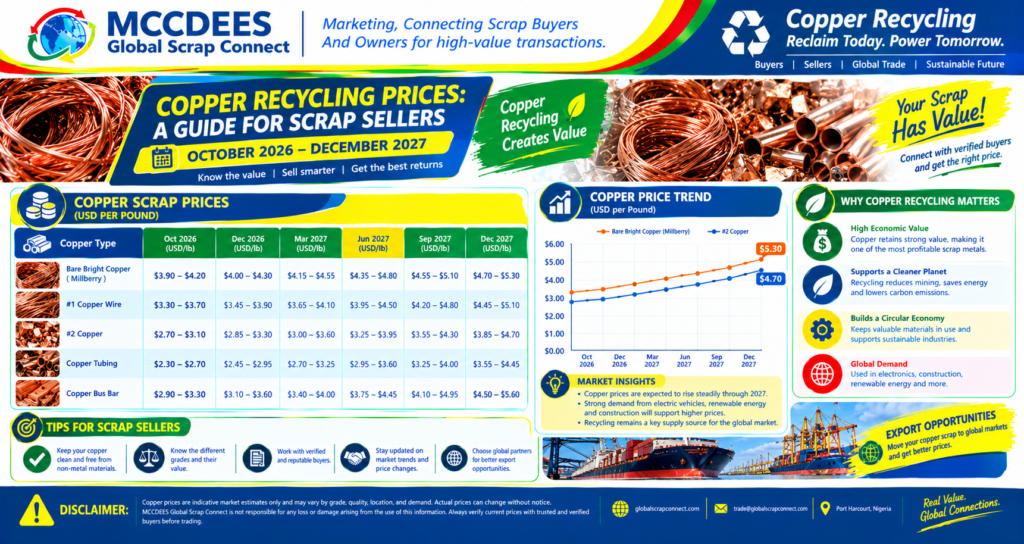
Copper is one of the most valuable metals in the recycling industry. It is important to pay close attention to copper recycling prices and grades. Copper powers homes, factories, vehicles, and communication systems across the world. However, not every piece of copper has the same value. Buyers carefully inspect copper grades before making an offer. While many sellers watch copper recycling prices, understanding copper grades often has an even greater impact on the final payment.
Knowing the difference between copper grades helps you prepare better shipments. It also allows you to communicate confidently with buyers. Proper sorting reduces confusion, speeds up inspections, and increases buyer trust.
Bare Bright Copper Commands Premium Interest
Bare bright copper is considered one of the highest-quality grades.
It usually consists of clean, uncoated, unalloyed copper wire.
The material should contain no insulation, paint, solder, or heavy oxidation.
Because of its excellent purity, recyclers process it with very little additional work.
Manufacturers value this copper because it performs like newly produced material.
Always store bare bright copper separately from other grades.
Even small contamination can reduce buyer interest.
Many businesses monitor copper recycling prices, but clean bare bright copper often attracts stronger offers regardless of daily market changes.
Good preparation protects its premium value.
Understanding #1 and #2 Copper
The next common grades are #1 copper and #2 copper.
#1 copper includes clean pipes, tubing, heavy wire, bus bars, and solid copper pieces.
This material should remain free from insulation, excessive solder, and heavy coatings.
#2 copper contains more contamination than #1.
It may include painted surfaces, soldered joints, oxidation, or light impurities.
Although #2 copper still has excellent recycling value, it usually requires additional processing.
Separate these grades carefully before inspections.
Clear organization helps buyers evaluate your shipment more efficiently.
Proper grading supports smoother negotiations.
Insulated Copper Wire Has Strong Market Demand
Insulated copper wire remains one of the most common recycling materials.
Factories, construction projects, ship dismantling, and electrical contractors generate large quantities.
The copper remains valuable even though insulation surrounds the wire.
Different insulation types require different recycling methods.
Some buyers purchase insulated wire directly.
Others prefer stripped copper ready for immediate processing.
Describe your wire honestly before negotiations begin.
Good communication improves buyer confidence.
Accurate grading helps buyers prepare realistic offers.
Mixed Copper Requires Extra Attention
Not every shipment contains perfectly sorted copper.
Mixed copper often includes different grades combined together.
This may happen during demolition projects or industrial cleanouts.
Although mixed copper still has recycling value, buyers usually inspect it more carefully.
Sorting materials before sale often improves the final offer.
Separate copper from brass, aluminum, steel, stainless steel, plastic, and rubber whenever possible.
Clean materials simplify recycling after delivery.
Professional preparation demonstrates attention to quality.
Good organization benefits both buyers and sellers.
Proper Sorting Creates Better Value
Sorting remains one of the easiest ways to increase recycling value.
Keep each copper grade in separate storage areas.
Label containers clearly before inspections begin.
Remove unnecessary plastic, dirt, wood, insulation, and waste materials whenever possible.
Clean copper reduces processing costs for buyers.
Organized shipments also speed up inspections.
Many sellers following copper recycling prices discover that better preparation often creates stronger buyer interest.
Quality matters just as much as quantity.
Preparation strengthens your negotiating position.
Storage Protects Copper Quality
Good storage helps maintain material value.
Store copper in dry, clean locations whenever possible.
Protect valuable materials from standing water, excessive dirt, and chemical contamination.
Organized storage also improves workplace safety.
Buyers appreciate suppliers who maintain professional facilities.
Well-kept inventory creates positive first impressions.
Proper storage prevents unnecessary deterioration before shipment.
Simple organization helps preserve long-term value.
Professional handling reflects responsible business management.
Documentation Builds Buyer Trust
Professional paperwork supports successful transactions.
Prepare detailed inventory records showing estimated quantities and copper grades.
Include recent photographs whenever possible.
Inspection reports also strengthen buyer confidence.
Commercial invoices should accurately describe every material.
Well-organized documents reduce misunderstandings during negotiations.
Reliable paperwork supports smoother transportation and customs procedures.
Professional documentation demonstrates honesty and preparation.
Trust grows through accurate information.
Market Knowledge Supports Better Decisions
Copper markets change throughout the year.
Construction, manufacturing, renewable energy, and transportation industries all influence demand.
Many businesses regularly monitor copper recycling prices to understand market activity.
However, experienced buyers also evaluate purity, grading, cleanliness, documentation, and shipment size.
Price alone never determines the final offer.
Understanding buyer expectations improves your selling strategy.
Knowledge creates stronger long-term opportunities.
Learning remains one of your greatest business advantages.
Understanding different copper grades helps you maximize the value of every shipment. Bare bright copper, #1 copper, #2 copper, insulated wire, and mixed copper each have unique characteristics that influence buyer decisions. While many sellers follow copper recycling prices to track market trends, successful recycling also depends on careful sorting, clean storage, accurate documentation, and honest communication. By preparing your copper professionally and understanding what buyers expect, you increase your chances of securing stronger offers while building lasting relationships in the global copper recycling industry.
Preparing Copper for Maximum Market Value
Copper remains one of the most sought-after metals in the recycling industry. Manufacturers, electrical companies, and metal processors continue searching for quality recycled copper. However, the value of your shipment depends on more than weight alone. Many sellers follow copper recycling prices, but proper preparation often has an even greater influence on the final offer.
Preparing copper correctly takes some extra effort, yet the rewards are worth it. Clean, organized, and accurately graded materials usually attract more buyer interest. Better preparation also creates smoother inspections and faster negotiations.
Sort Copper by Grade First
The first step is careful sorting.
Different copper grades have different values.
Keep bare bright copper separate from #1 copper, #2 copper, insulated wire, and mixed copper.
Avoid mixing copper with aluminum, brass, steel, stainless steel, plastic, or rubber.
Clear separation allows buyers to inspect your shipment more quickly.
Well-organized materials reduce processing work after delivery.
Proper sorting demonstrates professionalism and attention to quality.
Many sellers watching copper recycling prices discover that clean grading often improves buyer confidence.
Preparation begins with good organization.
Remove Unwanted Materials
Clean copper usually attracts stronger buyer interest.
Remove insulation, plastic, tape, rubber, dirt, oil, paint, and unnecessary debris whenever practical.
Avoid damaging the copper while cleaning.
Simple preparation saves buyers time during processing.
This often strengthens your negotiating position.
If cleaning requires excessive labor, discuss this honestly with potential buyers.
Accurate descriptions always create better business relationships.
Clean materials also photograph better during marketing.
Every improvement adds value to your shipment.
Store Copper Carefully
Storage conditions affect both quality and appearance.
Keep copper in clean, dry locations whenever possible.
Protect materials from standing water, excessive moisture, and chemical contamination.
Separate each copper grade into clearly labeled storage areas.
Organized storage simplifies inspections and loading operations.
Professional storage also improves workplace safety.
Buyers appreciate suppliers who maintain tidy facilities.
Well-kept inventory creates positive first impressions.
Simple organization protects long-term material value.
Measure and Record Everything
Professional records improve buyer confidence.
Estimate weights carefully before marketing your materials.
Prepare inventory lists showing each copper grade separately.
Take recent photographs from different angles.
Clear records help buyers understand available quantities.
Detailed inventories reduce unnecessary questions during negotiations.
Professional documentation demonstrates responsible business management.
Good preparation also supports smoother transportation planning.
Accurate information builds trust before inspections begin.
Present Your Copper Professionally
Marketing matters just as much as preparation.
Create clear listings using honest descriptions.
Mention the copper grade, estimated quantity, storage condition, and loading options.
Upload recent photographs showing the actual materials.
Avoid using outdated or unclear images.
Professional presentations attract more serious buyers.
Many companies comparing copper recycling prices also evaluate supplier reliability before making contact.
A strong first impression often leads to better conversations.
Professional communication strengthens your reputation.
Prepare for Buyer Inspections
Many buyers request inspections before completing purchases.
Organize your materials before inspection day arrives.
Ensure different grades remain clearly separated.
Make inventory records available for review.
Answer buyer questions honestly and professionally.
Provide access to photographs, inspection reports, and supporting documents.
Transparency reduces misunderstandings throughout negotiations.
Professional inspections create stronger buyer confidence.
Preparation speeds up decision-making for everyone involved.
Understand Market Conditions
Copper markets change throughout the year.
Construction activity, renewable energy projects, manufacturing growth, and transportation industries all influence demand.
Many suppliers regularly monitor copper recycling prices to understand market movements.
However, buyers also evaluate quality, grading, documentation, cleanliness, and shipment size.
Understanding these factors helps you negotiate more confidently.
Market knowledge supports smarter business planning.
Learning about buyer expectations creates better opportunities.
Preparation and knowledge work together.
Build Long-Term Buyer Relationships
One successful shipment can create future business.
Reliable buyers appreciate consistent quality and honest communication.
Stay in contact after completed transactions.
Inform buyers when new copper becomes available.
Ask for feedback after deliveries.
Satisfied customers often recommend dependable suppliers to others.
Long-term relationships provide greater stability than one-time sales.
Professional service strengthens your reputation throughout the recycling industry.
Trust becomes one of your greatest business assets.
Preparing copper for maximum market value involves much more than collecting recyclable materials. Careful sorting, thorough cleaning, organized storage, accurate documentation, professional marketing, and honest communication all influence buyer decisions. While many suppliers monitor copper recycling prices to follow market trends, successful sellers also focus on presentation, quality, and long-term relationships. By preparing your copper professionally and understanding buyer expectations, you increase your chances of receiving stronger offers while building lasting success in the global copper recycling market.
Building Trust with Overseas Scrap Buyers
Selling copper scrap to overseas buyers offers exciting business opportunities. International markets often provide access to larger buyers and long-term partnerships. However, successful global trading depends on much more than competitive pricing. While many companies monitor copper recycling prices, experienced buyers also look for reliable suppliers they can trust.
Trust is the foundation of every successful international transaction. Buyers want confidence that the materials match the description, documents are accurate, and communication remains clear throughout the process. Building that confidence takes time, but the rewards are worth the effort.
Honest Communication Builds Strong Relationships
Good communication is the first step toward trust.
Reply to buyer messages as quickly as possible.
Answer questions clearly and honestly.
Describe your copper materials exactly as they are.
Avoid exaggerating the quality, quantity, or condition of your inventory.
If your shipment contains mixed grades, explain this before negotiations begin.
Honest conversations prevent misunderstandings later.
Professional communication creates confidence from the very beginning.
Many buyers value honesty even more than low prices.
Trust grows through consistent communication.
Provide Clear Photos and Accurate Information
International buyers cannot always inspect your materials immediately.
High-quality photographs help them understand exactly what you are offering.
Take recent pictures from several different angles.
Show storage conditions, copper grades, loading areas, and available quantities.
Prepare detailed inventory lists before marketing your materials.
Include estimated weights and material descriptions.
Professional presentations reduce buyer uncertainty.
Many businesses comparing copper recycling prices also study supplier information carefully.
Good documentation creates stronger first impressions.
Keep Your Documents Well Organized
Professional paperwork supports successful international business.
Prepare commercial invoices, packing lists, inspection reports, and inventory records before negotiations become advanced.
Ensure every document matches the actual shipment.
Organized paperwork demonstrates attention to detail.
Digital copies also simplify communication with overseas buyers.
Professional documentation speeds up customs procedures and transportation planning.
Accurate records reduce unnecessary delays.
Reliable paperwork reflects responsible business management.
Preparation strengthens buyer confidence throughout the transaction.
Deliver Consistent Quality Every Time
One successful shipment creates opportunities for future business.
Deliver materials exactly as promised.
Separate copper grades carefully before shipment.
Keep bare bright copper, #1 copper, #2 copper, and insulated wire properly organized.
Store materials in clean, dry locations.
Avoid contamination from steel, aluminum, plastic, or waste materials.
Quality consistency creates lasting confidence.
Buyers appreciate suppliers who maintain high standards.
Reliable service encourages repeat orders.
Professional preparation supports long-term partnerships.
Be Transparent During Negotiations
Every international transaction involves questions.
Some buyers request additional photographs.
Others ask for inspection reports or video calls.
Provide information whenever possible.
If unexpected problems arise, explain them immediately.
Transparency reduces uncertainty.
Professional honesty strengthens relationships during difficult situations.
Most buyers appreciate suppliers who communicate openly.
Trust grows stronger through openness.
Clear expectations benefit everyone involved.
Understand Buyer Priorities
Every overseas buyer has different goals.
Some require large monthly shipments.
Others seek specific copper grades.
Certain buyers focus on long-term contracts instead of one-time purchases.
Learning about customer needs helps you prepare better offers.
Ask questions during discussions.
Listen carefully to buyer concerns.
Understanding priorities improves cooperation.
Good relationships begin with understanding each other’s business.
Stay Connected After the Sale
Business should not end after delivery.
Contact buyers after shipments arrive.
Ask whether materials met their expectations.
Request feedback about documentation, communication, and delivery.
Inform buyers when new inventory becomes available.
Regular updates keep your business visible.
Satisfied buyers often recommend dependable suppliers to colleagues.
Long-term communication creates lasting partnerships.
Professional follow-up demonstrates commitment to customer satisfaction.
Reputation Opens New Doors
Your reputation becomes one of your greatest business assets.
Positive experiences encourage buyers to recommend your company.
Reliable service creates valuable referrals throughout the recycling industry.
Many international buyers prefer trusted suppliers over unknown companies.
Businesses that consistently deliver quality continue attracting new opportunities.
While many suppliers monitor copper recycling prices, successful exporters also invest in building a strong reputation.
Professional behavior creates confidence that lasts beyond one transaction.
Trust becomes your strongest competitive advantage.
Building trust with overseas scrap buyers requires honesty, consistency, organization, and professional communication. Accurate descriptions, quality photographs, reliable documentation, and dependable service all help strengthen buyer confidence. While copper recycling prices remain important during negotiations, long-term success depends even more on reputation and reliability. By delivering what you promise and maintaining strong relationships, you position your business for repeat orders, valuable referrals, and lasting success in the international copper recycling market.
Emerging Opportunities in Recycled Metals
The recycling industry is growing faster than many people expected. Around the world, businesses are searching for reliable sources of recycled metals. Steel, copper, aluminum, stainless steel, brass, and lead all support modern industries. While many suppliers monitor copper recycling prices, exciting opportunities now extend far beyond daily market movements.
Recycled metals help manufacturers reduce costs and protect natural resources. They also support cleaner production methods and sustainable business practices. As industries continue expanding, recycled materials will remain an important part of the global economy.
Renewable Energy Creates New Demand
Renewable energy projects need large amounts of recycled metals.
Solar farms require copper wiring and aluminum frames.
Wind turbines contain steel, copper, and specialized metal components.
Battery storage systems also depend on valuable recyclable materials.
Many governments continue investing in cleaner energy technologies.
These projects create long-term demand for recycled metals.
Copper remains especially important because of its excellent electrical conductivity.
Many companies tracking copper recycling prices expect renewable energy to support future market growth.
The shift toward cleaner energy creates exciting business opportunities.
Electric Vehicles Increase Metal Consumption
Electric vehicles continue changing the transportation industry.
They contain much more copper than many traditional vehicles.
Charging stations also require copper wiring and electrical systems.
Manufacturers need steel, aluminum, stainless steel, and specialty alloys for vehicle production.
Battery technology creates additional demand for recyclable materials.
As electric vehicles become more common, recycling opportunities continue expanding.
Recovered metals help manufacturers reduce production costs.
Responsible recycling also supports environmental sustainability.
Transportation innovation strengthens future recycling markets.
Urban Development Supports Recycling
Cities continue growing across many countries.
New homes, hospitals, schools, factories, bridges, and transportation systems all require recycled metals.
Construction companies regularly purchase recycled steel for structural projects.
Copper supports electrical systems throughout modern buildings.
Aluminum appears in roofing, windows, and lightweight structures.
Infrastructure improvements increase demand for quality recycled materials.
Growing populations encourage additional construction activity.
Long-term urban development creates stable business opportunities.
Recycling remains an important part of modern construction.
Marine and Industrial Scrap Offer Hidden Value
Retired ships contain valuable recyclable metals and reusable equipment.
Factories also generate production offcuts, machinery, electrical systems, and structural materials.
Industrial modernization projects create additional recycling opportunities.
Demolition work often produces large quantities of valuable metals.
Professional recovery methods maximize material value.
Careful sorting improves recycling efficiency.
Well-organized inventories attract serious buyers.
Marine and industrial recycling will continue supporting global manufacturing.
Hidden value often exists where many people least expect it.
Digital Trading Opens International Markets
Technology has transformed metal trading.
Online marketplaces connect buyers and sellers from different countries.
Professional listings allow suppliers to showcase available materials.
Recent photographs, accurate descriptions, and detailed inventories improve buyer confidence.
Digital communication speeds up negotiations.
Video inspections also reduce unnecessary travel.
Many businesses comparing copper recycling prices also search online for dependable suppliers.
Technology expands opportunities beyond local markets.
Global visibility supports business growth.
Sustainability Becomes a Competitive Advantage
Environmental responsibility continues influencing buyer decisions.
Manufacturers increasingly choose recycled metals because they reduce mining activity.
Recycling also lowers energy consumption compared to producing new metals.
Governments encourage sustainable business practices through environmental programs.
Consumers appreciate companies supporting responsible recycling.
Businesses demonstrating environmental commitment often strengthen their reputation.
Sustainability now creates both environmental and commercial benefits.
Responsible recycling helps protect resources for future generations.
Green business practices will remain important.
Knowledge Creates Better Opportunities
Market knowledge helps businesses stay competitive.
Understanding buyer demand improves inventory planning.
Following construction, manufacturing, renewable energy, and transportation trends supports smarter decisions.
Many suppliers monitor copper recycling prices to understand local market conditions.
However, experienced businesses also study global demand and long-term industry changes.
Knowledge improves negotiations while reducing unnecessary risks.
Continuous learning creates stronger business opportunities.
Preparation supports lasting success.
Strong Partnerships Support Future Growth
Business success depends on more than materials alone.
Reliable buyers appreciate dependable suppliers.
Professional communication builds trust throughout every transaction.
Honest descriptions reduce misunderstandings during negotiations.
Consistent quality encourages repeat business.
Satisfied buyers often recommend trusted suppliers to others.
Long-term partnerships provide greater stability than one-time sales.
Strong relationships help businesses grow through changing market conditions.
Trust remains one of the industry’s greatest assets.
Emerging opportunities in recycled metals continue expanding through renewable energy, electric vehicles, urban development, marine recycling, digital trading, and sustainable manufacturing. While many businesses monitor copper recycling prices to follow market trends, long-term success depends on quality materials, market knowledge, professional relationships, and responsible recycling practices. By embracing innovation and preparing for future demand, you position your business to benefit from the growing global market for recycled metals.