
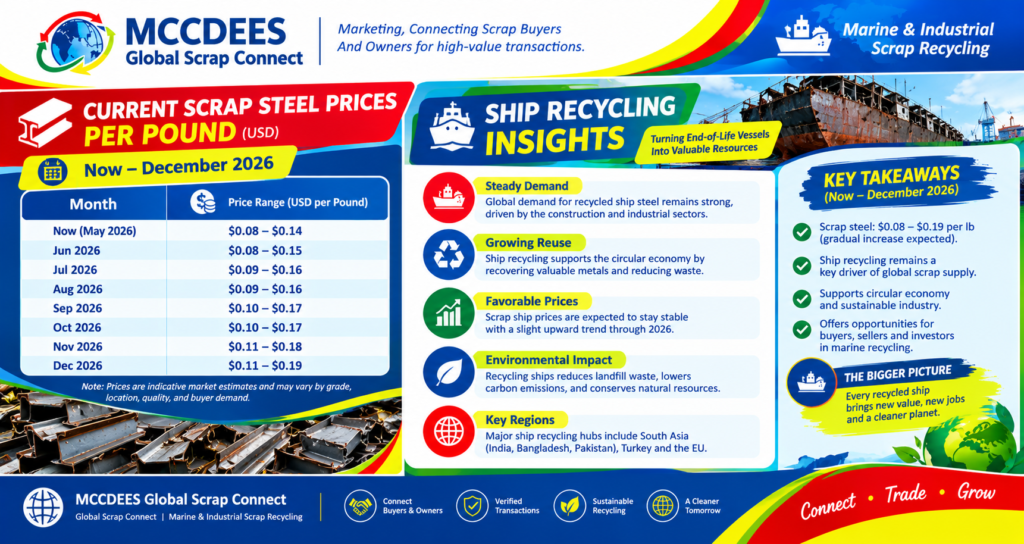
When a ship reaches the end of its working life, its journey is not truly over. Instead, it begins a new chapter through vessel demolition and metal recycling. Large commercial ships contain thousands of tons of valuable steel waiting for recovery. While many recyclers monitor steel prices per pound, the real revenue comes from careful planning, efficient recovery, and smart marketing.
Modern ship demolition transforms retired vessels into valuable raw materials for construction, manufacturing, and infrastructure projects. Every recovered steel plate, beam, and support section helps reduce waste while supporting industries worldwide. With proper management, vessel demolition becomes both profitable and environmentally responsible.
Steel Makes Up Most of Every Vessel
Steel forms the main structure of almost every commercial ship.
The hull contains heavy steel plates.
Decks rely on structural steel beams.
Cargo holds include reinforced steel supports.
Bulkheads divide the vessel into secure sections.
Engine foundations contain thick steel frames.
Storage tanks also use durable steel construction.
Large vessels provide enormous recycling opportunities.
Recovered steel supports many industries.
Strong steel demand keeps recycling active.
Careful Demolition Protects Material Value
Good planning starts before cutting begins.
Inspect the vessel thoroughly.
Identify valuable equipment early.
Separate reusable machinery from recyclable materials.
Remove hazardous substances safely.
Protect steel from unnecessary contamination.
Organize dismantling into manageable stages.
Store recovered materials correctly.
Professional handling improves buyer confidence.
Careful recovery increases overall project returns.
Sorting Improves Selling Opportunities
Not every steel section has identical value.
Separate structural beams from smaller pieces.
Keep steel plates organized.
Remove attached non-metal materials whenever practical.
Separate stainless steel from carbon steel.
Clean materials require less processing.
Professional sorting reduces buyer costs.
Accurate grading improves negotiations.
Preparation strengthens every shipment.
Organization creates better business opportunities.
Reusable Equipment Adds Extra Revenue
Steel is only part of the project.
Many vessels contain valuable machinery.
Generators often remain operational.
Pumps sometimes require minor repairs.
Deck cranes continue serving industrial operations.
Anchors and chains remain highly desirable.
Marine engines may interest refurbishment companies.
Navigation equipment attracts specialist buyers.
Reusable equipment increases total project income.
Every inspection reveals additional possibilities.
Global Demand Keeps Markets Strong
Construction companies require recycled steel daily.
Factories consume recycled materials continuously.
Infrastructure projects depend on structural steel.
Shipyards purchase recycled marine materials.
Manufacturers reduce production costs through recycling.
International buyers seek dependable steel supplies.
Reliable logistics support worldwide trade.
Growing industrial demand strengthens recycling markets.
Many businesses monitor steel prices per pound while planning purchases.
Global demand creates long-term opportunities.
Documentation Supports Successful Sales
Professional paperwork builds buyer confidence.
Prepare detailed inventory reports.
Estimate steel quantities accurately.
Take recent photographs throughout inspections.
Document reusable equipment separately.
Maintain digital business records.
Inspection reports simplify negotiations.
Reliable paperwork reduces misunderstandings.
Professional documentation reflects responsible management.
Preparation speeds every transaction.
Sustainability Creates Long-Term Benefits
Steel recycling protects natural resources.
Recovered steel reduces mining activity.
Manufacturing recycled steel requires less energy.
Lower energy use reduces greenhouse gas emissions.
Responsible recycling minimizes industrial waste.
Communities benefit from cleaner environments.
Manufacturers increasingly choose recycled materials.
Environmental responsibility strengthens company reputation.
Many buyers value sustainability alongside steel prices per pound.
Green practices support future business growth.
Market Knowledge Maximizes Revenue
Knowledge improves business decisions.
Monitor construction activity regularly.
Study manufacturing demand carefully.
Understand transportation costs.
Compare buyer offers before selling.
Prepare materials professionally.
Build trusted buyer relationships.
Stay informed about international recycling markets.
Many professionals monitor steel prices per pound, but quality preparation often influences final returns more than price changes.
Learning creates lasting competitive advantages.
Vessel demolition generates steel revenue by recovering valuable structural materials that continue serving industries around the world. Careful inspections, organized sorting, professional documentation, and responsible recycling all help maximize project value. While many businesses watch steel prices per pound to understand market conditions, successful demolition depends equally on preparation, efficient recovery, and trusted buyer relationships. By treating every retired vessel as a valuable collection of reusable resources, you create stronger financial returns while supporting sustainable manufacturing and a cleaner global recycling industry.
Hidden Value in Marine Structures and Equipment
Old ships often appear worn, rusty, and ready for retirement. However, beneath that aging exterior lies a surprising collection of valuable materials and equipment. Every vessel contains recyclable metals, reusable machinery, and industrial components that still have economic value. While many recyclers monitor steel prices per pound, the true worth of a vessel comes from everything hidden inside.
Marine vessels are designed to operate in demanding environments for many years. Because of this, builders use durable materials and reliable equipment throughout every section. Even after decades of service, many of these components remain suitable for recycling or refurbishment. A careful inspection helps uncover opportunities that many people overlook.
Structural Steel Provides the Largest Return
Steel forms the main framework of most vessels.
The hull contains thick steel plates.
Decks depend on heavy structural beams.
Cargo holds use reinforced steel supports.
Bulkheads strengthen internal compartments.
Engine rooms include strong steel foundations.
Storage tanks also contain durable steel construction.
Large vessels hold thousands of recyclable steel tons.
Construction companies need recycled steel constantly.
Strong demand supports healthy steel prices per pound across many markets.
Valuable Equipment Still Has Life
The vessel may retire before its equipment does.
Generators often remain operational.
Marine pumps continue performing efficiently.
Compressors may require only simple maintenance.
Anchors retain their strength for decades.
Heavy chains remain valuable.
Deck cranes support industrial lifting work.
Winches serve ports and construction sites.
Marine engines attract refurbishment specialists.
Navigation systems sometimes contain reusable electronics.
Every inspection uncovers additional opportunities.
Careful recovery increases total project value.
Non-Ferrous Metals Add Significant Income
Steel is only part of the opportunity.
Copper wiring runs throughout the vessel.
Electrical motors contain valuable copper windings.
Aluminum appears in ladders and access doors.
Window frames often contain lightweight aluminum.
Stainless steel protects kitchens and engine spaces.
Brass fittings support plumbing systems.
Bronze propellers remain highly valuable.
Heat exchangers may contain copper alloys.
Proper sorting protects every metal’s value.
Complete recovery improves profitability.
Professional Recovery Makes a Difference
Good planning starts before dismantling.
Inspect every vessel carefully.
Prepare detailed recovery plans.
Separate reusable equipment immediately.
Sort metals by type.
Remove hazardous materials safely.
Protect valuable machinery during dismantling.
Store recovered materials correctly.
Professional handling reduces unnecessary damage.
Preparation supports stronger buyer confidence.
Organized recovery improves efficiency.
Documentation Builds Buyer Confidence
Professional buyers appreciate accurate information.
Prepare detailed inventory reports.
Estimate material quantities carefully.
Take recent inspection photographs.
Document reusable equipment separately.
Maintain maintenance records when available.
Prepare digital copies for sharing.
Reliable paperwork reduces unnecessary questions.
Professional documentation speeds negotiations.
Good records support smoother transactions.
Preparation reflects responsible business practices.
Sustainability Creates Lasting Benefits
Marine recycling protects valuable natural resources.
Recovered steel reduces mining activity.
Recycled metals require less production energy.
Lower energy use reduces greenhouse gas emissions.
Responsible dismantling minimizes industrial waste.
Communities benefit from cleaner recycling practices.
Manufacturers increasingly choose recycled materials.
Environmental responsibility strengthens company reputation.
Many buyers value sustainability alongside steel prices per pound when selecting suppliers.
Green practices create future opportunities.
Global Markets Increase Demand
Recycled marine materials support industries worldwide.
Construction companies purchase structural steel.
Factories require recycled metals daily.
Infrastructure projects consume large steel quantities.
Shipyards buy reusable equipment.
Renewable energy projects use recycled materials.
International buyers seek dependable suppliers.
Reliable logistics simplify exports.
Growing demand strengthens recycling markets.
Prepared businesses remain competitive globally.
Knowledge Helps Maximize Returns
Every successful project begins with knowledge.
Understand different metal grades.
Monitor construction activity regularly.
Study manufacturing demand carefully.
Compare buyer offers before selling.
Build trusted industry relationships.
Prepare materials professionally.
Keep accurate records throughout every project.
Many professionals monitor steel prices per pound, but thorough inspections often reveal additional hidden value.
Continuous learning supports long-term success.
Hidden value exists throughout marine structures and equipment, far beyond the visible steel framework. Structural steel, copper wiring, aluminum components, stainless steel fittings, engines, pumps, cranes, anchors, and reusable machinery all contribute to a vessel’s total worth. While many businesses follow steel prices per pound to estimate recycling returns, successful projects depend on careful inspections, professional recovery, accurate documentation, and responsible recycling. By recognizing every valuable asset inside a retired vessel, you maximize revenue while supporting sustainable industries and giving important materials a productive second life.
Connecting Vessel Owners with Qualified Buyers
Finding the right buyer can make a huge difference when selling a retired vessel. A qualified buyer understands marine recycling, values honest communication, and knows how to handle large projects. Instead of chasing countless inquiries, you can focus on buyers who appreciate the full value of your asset. While many owners watch steel prices per pound, successful sales depend on trust, preparation, and professional relationships.
Every vessel is unique. Some contain thousands of tons of recyclable steel, while others include valuable machinery and reusable equipment. A qualified buyer looks beyond the hull and considers the complete value of the project. That approach often leads to smoother negotiations and stronger long-term partnerships.
Prepare Your Vessel Before Marketing
Preparation creates a strong first impression.
Inspect the vessel carefully.
Record its overall condition honestly.
Estimate recyclable material quantities.
Identify reusable machinery and equipment.
Take clear photographs from different angles.
Capture the hull, deck, engine room, and cargo spaces.
Prepare an organized inventory list.
Gather available maintenance records.
Professional preparation builds buyer confidence.
Well-presented vessels attract serious inquiries.
Share Accurate Information
Honest communication builds trust quickly.
Provide the correct vessel dimensions.
State the vessel’s current location.
Describe its age accurately.
Mention previous repairs when relevant.
Explain available equipment clearly.
Avoid exaggerated claims.
Answer buyer questions promptly.
Reliable information reduces misunderstandings.
Professional communication supports smoother negotiations.
Transparency encourages lasting business relationships.
Use Professional Networks
The right connections create better opportunities.
Marine recycling platforms attract qualified buyers.
Professional websites increase business visibility.
Industry directories expand your reach.
Business networking introduces trusted contacts.
Email marketing supports direct communication.
Video meetings simplify early inspections.
Marine consultants may recommend suitable buyers.
Reliable networks reduce unnecessary delays.
Strong connections improve business success.
Documentation Strengthens Every Sale
Good paperwork increases buyer confidence.
Prepare ownership documents carefully.
Organize inspection reports.
Create detailed inventory lists.
Include reusable equipment separately.
Provide recent photographs.
Maintain digital copies for sharing.
Professional records reduce unnecessary questions.
Reliable documentation speeds buyer evaluations.
Preparation reflects responsible business management.
Organized information supports faster decisions.
Understand What Buyers Value
Qualified buyers evaluate many factors.
Steel quantity remains important.
Equipment condition also matters.
Safe inspection access builds confidence.
Clear documentation improves transparency.
Professional communication strengthens negotiations.
Reliable sellers receive greater attention.
Preparation creates competitive advantages.
Many buyers compare equipment quality alongside steel prices per pound before making offers.
Understanding buyer priorities improves outcomes.
Build Long-Term Partnerships
One successful transaction creates future opportunities.
Stay connected after every completed project.
Notify buyers about future vessel availability.
Respond professionally to every message.
Deliver information when promised.
Reliable service encourages repeat business.
Satisfied buyers recommend dependable suppliers.
Strong partnerships reduce future marketing costs.
Trust remains one of your greatest business assets.
Long-term relationships support sustainable growth.
Global Markets Expand Your Options
Qualified buyers operate worldwide.
International demand supports marine recycling.
Ship recycling companies seek retired vessels.
Industrial dismantling firms purchase offshore structures.
Manufacturers require recycled steel supplies.
Reliable logistics simplify international transactions.
Digital communication removes geographical barriers.
Global markets increase selling opportunities.
Prepared owners reach more qualified buyers.
Professional marketing strengthens global visibility.
Market Knowledge Creates Better Results
Knowledge improves every negotiation.
Monitor marine recycling trends.
Study manufacturing demand regularly.
Understand transportation costs.
Compare offers from several buyers.
Prepare your vessel thoroughly.
Build trusted professional relationships.
Stay informed about global recycling markets.
Many owners monitor steel prices per pound, but complete project value often determines stronger final agreements.
Continuous learning creates lasting advantages.
Connecting vessel owners with qualified buyers requires preparation, honesty, professional communication, and strong industry relationships. Accurate documentation, detailed inspections, organized marketing, and trusted business networks all help attract serious buyers from around the world. While many owners follow steel prices per pound to understand market conditions, successful vessel sales depend equally on presenting complete information and building confidence throughout the process. By focusing on quality relationships instead of quick deals, you position your business for better negotiations, repeat opportunities, and long-term success in the global marine recycling industry.
Innovations in Marine Recycling Technology
Marine recycling has changed dramatically over the past few decades. What once depended mainly on manual labor now combines skilled workers with advanced technology. Modern recycling yards recover more valuable materials while improving safety and protecting the environment. While many businesses monitor steel prices per pound, innovative technology often determines how much value can actually be recovered from every vessel.
Every retired ship contains thousands of reusable components. Modern equipment helps identify, separate, process, and document these materials with greater accuracy. These improvements create better financial returns while reducing waste and environmental impact. Technology continues making marine recycling smarter every year.
Smart Equipment Improves Material Recovery
Modern recycling yards use specialized machinery daily.
Hydraulic shears cut thick steel efficiently.
Heavy cranes move oversized vessel sections safely.
Magnetic handlers separate ferrous metals quickly.
Portable metal analyzers identify different alloys instantly.
Digital measuring tools improve quantity estimates.
High-capacity loaders speed material handling.
Modern balers prepare scrap for transportation.
Specialized lifting equipment improves workplace safety.
Advanced machinery increases overall productivity.
Better tools recover more valuable materials.
Digital Planning Creates Better Projects
Successful recycling starts with detailed planning.
Digital vessel drawings improve project preparation.
Inspection software organizes important information.
Electronic inventory systems track recovered materials.
Cloud storage protects business records.
Mobile applications improve field communication.
Digital photographs support buyer discussions.
Real-time project updates improve coordination.
Better planning reduces unnecessary delays.
Technology strengthens project management.
Organized operations improve business performance.
Automation Boosts Efficiency
Automation continues transforming marine recycling.
Conveyor systems move materials smoothly.
Electronic weighing systems improve accuracy.
Machine-assisted cutting increases precision.
Automated sorting reduces manual work.
Digital monitoring tracks project progress.
Workers complete tasks more efficiently.
Automation lowers operating costs.
Processing becomes faster and more consistent.
Modern systems improve productivity.
Efficiency creates stronger business opportunities.
Environmental Technology Protects Nature
Technology supports cleaner recycling operations.
Advanced filtration systems reduce pollution.
Dust suppression equipment improves air quality.
Water treatment systems protect nearby waterways.
Oil recovery systems prevent unnecessary contamination.
Hazardous materials receive safer handling.
Environmental monitoring improves compliance.
Modern containment equipment protects surrounding communities.
Cleaner recycling strengthens public confidence.
Responsible technology benefits future generations.
Environmental innovation continues expanding.
Inspection Technology Reveals Hidden Value
Modern inspections are more accurate.
Portable analyzers identify metal grades immediately.
Digital scanners measure vessel dimensions.
Thermal imaging reveals hidden components.
Inspection drones reach difficult areas safely.
High-resolution cameras improve documentation.
Electronic reports organize findings efficiently.
Detailed inspections reduce overlooked materials.
Better information supports stronger buyer confidence.
Technology uncovers hidden recycling opportunities.
Accurate inspections improve project planning.
Better Data Supports Better Decisions
Reliable information improves business performance.
Digital inventory systems organize recovered materials.
Electronic reports simplify communication.
Real-time tracking improves logistics planning.
Performance analysis identifies operational improvements.
Businesses reduce unnecessary waste.
Accurate records strengthen negotiations.
Professional documentation builds customer confidence.
Data supports smarter business decisions.
Knowledge creates competitive advantages.
Technology improves daily management.
Innovation Strengthens Market Opportunities
Modern technology attracts professional buyers.
Efficient recovery lowers processing costs.
Clean sorting improves material quality.
Accurate grading reduces pricing disputes.
Professional documentation speeds transactions.
Reliable operations encourage repeat business.
Many buyers evaluate recovery efficiency alongside steel prices per pound when comparing suppliers.
Technology improves customer satisfaction.
Innovation strengthens international competitiveness.
Prepared businesses remain industry leaders.
The Future Looks Bright
Marine recycling technology continues advancing rapidly.
Artificial intelligence improves material identification.
Robotics may support future dismantling projects.
Smart sensors increase workplace safety.
Digital communication strengthens global partnerships.
Automation improves resource recovery.
Environmental innovations reduce industrial impact.
Manufacturers continue demanding recycled steel.
Many businesses monitor steel prices per pound, but innovation increasingly shapes long-term success.
Technology will continue creating exciting opportunities.
Innovations in marine recycling technology continue transforming the industry through smart machinery, digital planning, automation, advanced inspections, and environmental protection. These improvements help businesses recover more valuable materials while increasing safety and reducing waste. While many professionals follow steel prices per pound to understand market conditions, technology plays an equally important role in maximizing recovery and profitability. By embracing innovation and modern recycling practices, you position your business for long-term success in a cleaner, more efficient, and increasingly competitive global recycling industry.